
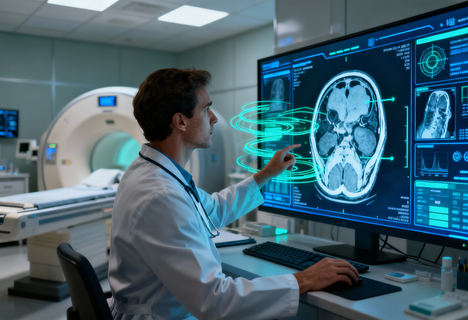
Explore how AI and machine learning are revolutionizing radiology diagnosis, improving accuracy and reducing turnaround times.
Artificial Intelligence (AI) and machine learning are fundamentally transforming the field of radiology. What once seemed like science fiction is now becoming an everyday reality in modern healthcare facilities around the world.
The Evolution of AI in Medical Imaging
Over the past decade, AI technologies have evolved from simple pattern recognition to sophisticated deep learning systems capable of detecting subtle abnormalities that might escape the human eye. These systems are trained on millions of medical images, learning to identify patterns associated with various conditions.
Key Benefits of AI-Powered Radiology
The integration of AI into radiology workflows brings several transformative benefits:
- Enhanced Accuracy: AI algorithms can detect minute details and patterns that may be difficult for radiologists to spot, especially in complex cases or when fatigue sets in.
- Reduced Turnaround Times: Automated preliminary analysis helps prioritize urgent cases and speeds up the overall diagnostic process.
- Consistency: AI provides consistent analysis regardless of time of day or workload, eliminating variability in interpretation.
- Early Detection: Machine learning models can identify early-stage diseases, enabling earlier intervention and better patient outcomes.
Real-World Applications
AI is being successfully deployed across various imaging modalities:
Chest X-rays: AI systems can detect pneumonia, tuberculosis, and lung nodules with remarkable accuracy, often matching or exceeding human performance.
CT Scans: Advanced algorithms help identify brain hemorrhages, pulmonary embolisms, and various tumors, providing critical support in emergency situations.
MRI Analysis: Machine learning assists in detecting brain tumors, multiple sclerosis lesions, and other neurological conditions with enhanced precision.
The Human-AI Partnership
It's important to understand that AI is not replacing radiologists—it's augmenting their capabilities. The most effective approach combines AI's computational power with human expertise, clinical judgment, and patient care skills. Radiologists remain essential for contextualizing findings, correlating with clinical history, and making final diagnostic decisions.
Challenges and Considerations
While the potential is enormous, implementing AI in radiology comes with challenges:
- Ensuring data privacy and HIPAA compliance
- Validating AI algorithms across diverse patient populations
- Integrating AI tools seamlessly into existing workflows
- Training staff to effectively use AI-powered systems
- Addressing liability and regulatory concerns
The Future of AI in Radiology
Looking ahead, we can expect even more sophisticated AI applications. Future systems will likely offer predictive analytics, personalized treatment recommendations, and integration with other clinical data sources to provide comprehensive patient insights.
As AI technology continues to advance, the radiology field stands at the forefront of a healthcare revolution. By embracing these tools while maintaining the irreplaceable human element of medical care, we can achieve better outcomes for patients worldwide.